Polyaspartic & Polyurea Floor Coatings Built as a System
Surface Shield installs professional resinous flooring throughout South Jersey using materials that include epoxy, polyaspartic, and polyurea. Not every project uses all three — we select a complete system around the concrete, the environment, and how the floor is used.
Prefer to talk it through? Call 609-551-4154
What are polyaspartic & polyurea coatings?
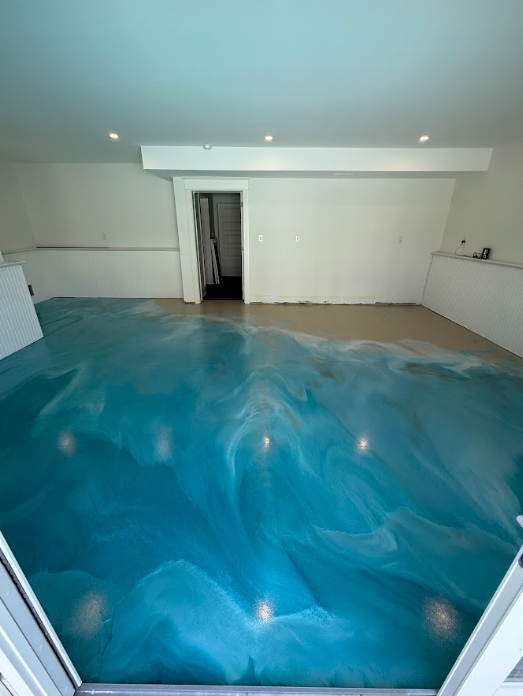
If you've been researching garage or concrete floor coatings, you've probably run into both terms. They're fast-curing resins used in professional floors — often as topcoats — and they show up constantly in "one-day install" advertising. Useful to know, but the chemistry name alone doesn't tell you whether a floor is right for your space or installed correctly.
Polyaspartic
A resin often chosen for its fast cure and clear, durable finish. It's frequently used as a topcoat over a base layer, and it's what many advertisements are referring to when they mention a 'one-day' garage floor.
Polyurea
Closely related to polyaspartic and part of the same broader chemistry family. In flooring, the terms are often used together because the materials share fast-curing, durable characteristics used within a coating system.
Within a System
In a professional floor, these resins are usually one part of a prepared, multi-layer buildup — not the entire floor. The chemistry name alone doesn't tell you whether the installation is appropriate or well executed.
Different materials, different roles
These resins are often pitched against each other, but in practice they frequently work together. Each has different characteristics and a potential role within a flooring system — there's no single material that's right for every floor.
Epoxy
A high-build resin known for strong adhesion and a hard, seamless film. It often serves as the base or body coat that builds thickness within a system.
Polyaspartic / Polyurea
Fast-curing resins frequently used as a topcoat over a base layer. Their handling and finish characteristics differ from epoxy, which is why they're selected for specific roles.
Working Together
Many floors pair an epoxy-family base with a polyaspartic or polyurea topcoat. Which combination fits depends on the substrate, environment, and how the floor is used — not on the label alone.
Rather than declaring one chemistry the winner, we match materials to the job. For a closer look at how epoxy fits into a system, explore Epoxy Floor Coatings.
A coating name is only part of the story
Choosing a contractor because an ad says "polyaspartic" or "epoxy" misses most of what actually determines how a floor performs and how long it lasts. The finished result comes from the whole system working together.
Existing concrete / substrate
Every system starts with the slab — its age, wear, moisture, and any prior coating all shape what belongs on top.
Mechanical surface preparation
Diamond grinding and mechanical prep profile the concrete so the resin bonds to sound substrate rather than contaminants.
Repairs & preparation
Cracks, pits, and damage are addressed before any resin goes down, so the finished floor sits on a stable base.
Appropriate base / resin layers
The buildup — which resins and how many coats — is selected for the environment instead of applied by default.
Decorative flake / chip where applicable
Broadcast flake adds texture, hides imperfections, and builds thickness where it suits the space.
Appropriate protective topcoat
A topcoat matched to the environment — often polyaspartic or polyurea — carries the daily traffic, cleaning, and wear.
SS-HF1™ High-Performance Flake System
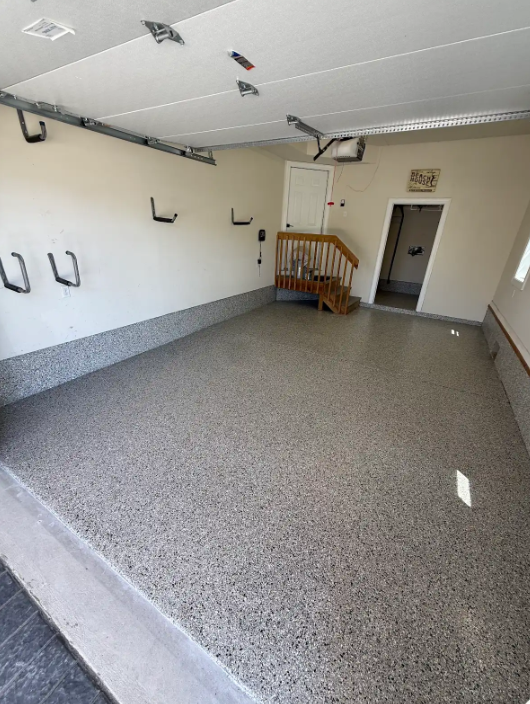
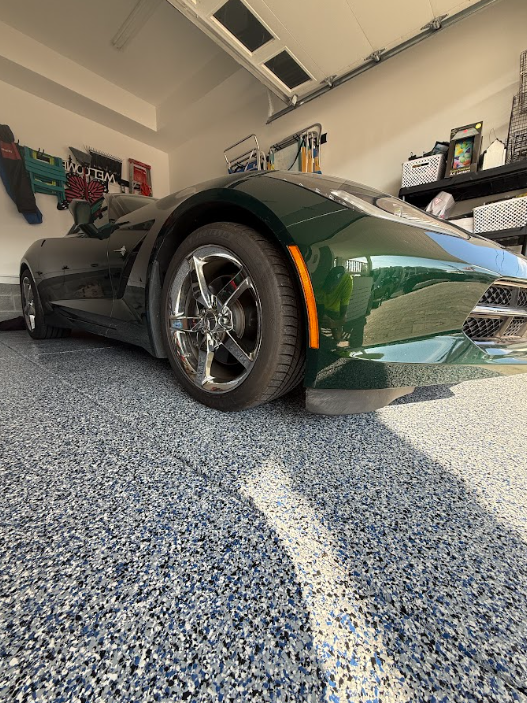
SS-HF1™ is Surface Shield's complete flake flooring system — not a single bucket of product. It brings together properly prepared concrete, an appropriate resin buildup, a full broadcast of decorative flake, and a protective topcoat, installed as one system.
Depending on the space, that topcoat is often a fast-curing polyaspartic or polyurea. But the performance comes from the whole assembly working together — the reason we talk about a system rather than a chemistry. It's a popular choice for garage floor coatings, where a durable, easy-to-clean finish makes a daily difference.
Applications across every environment
Systems that use polyaspartic and polyurea appear across residential, commercial, and industrial spaces. Whether they're the right choice — and how they're built into the floor — depends on each environment.
Residential
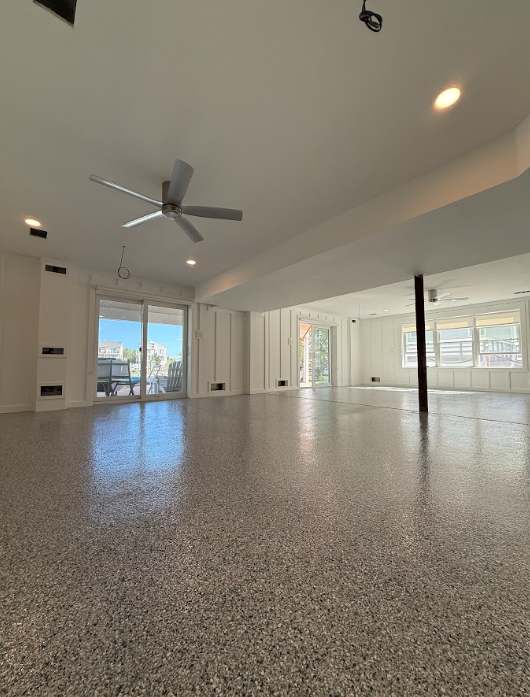
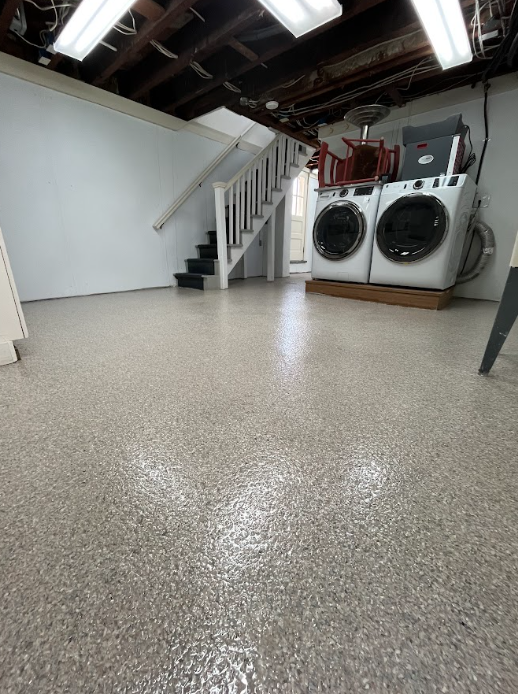
Garages, basements, and interior living spaces where homeowners want a clean, durable, low-maintenance floor with a fast return to service.
Explore Residential Floor Coatings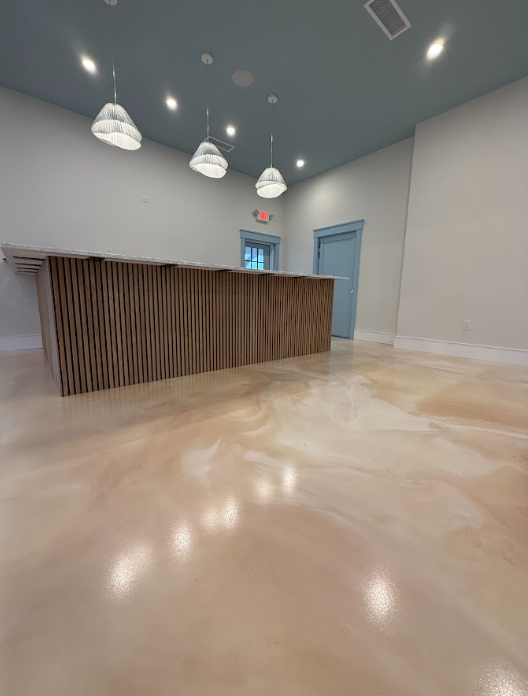
Commercial
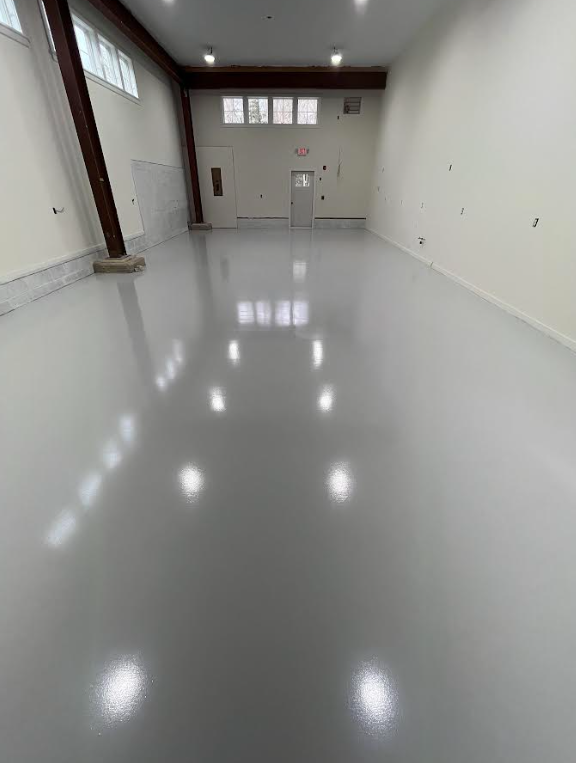
Showrooms, retail, hospitality, and back-of-house floors where appearance, cleanability, and minimizing downtime all matter.
Explore Commercial Floor Coatings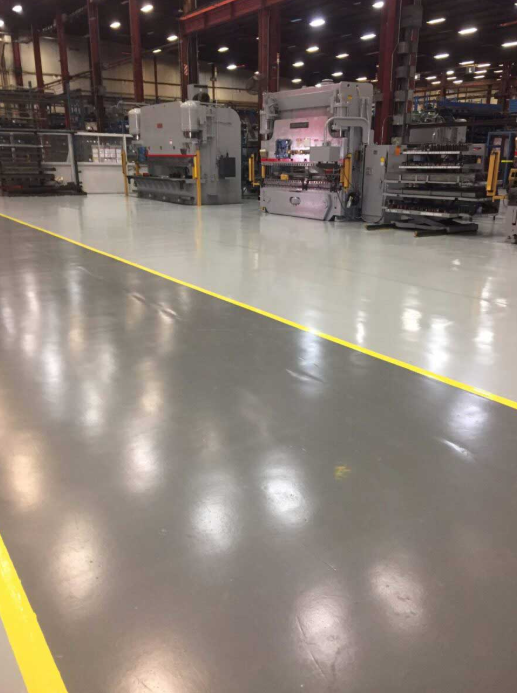
Industrial
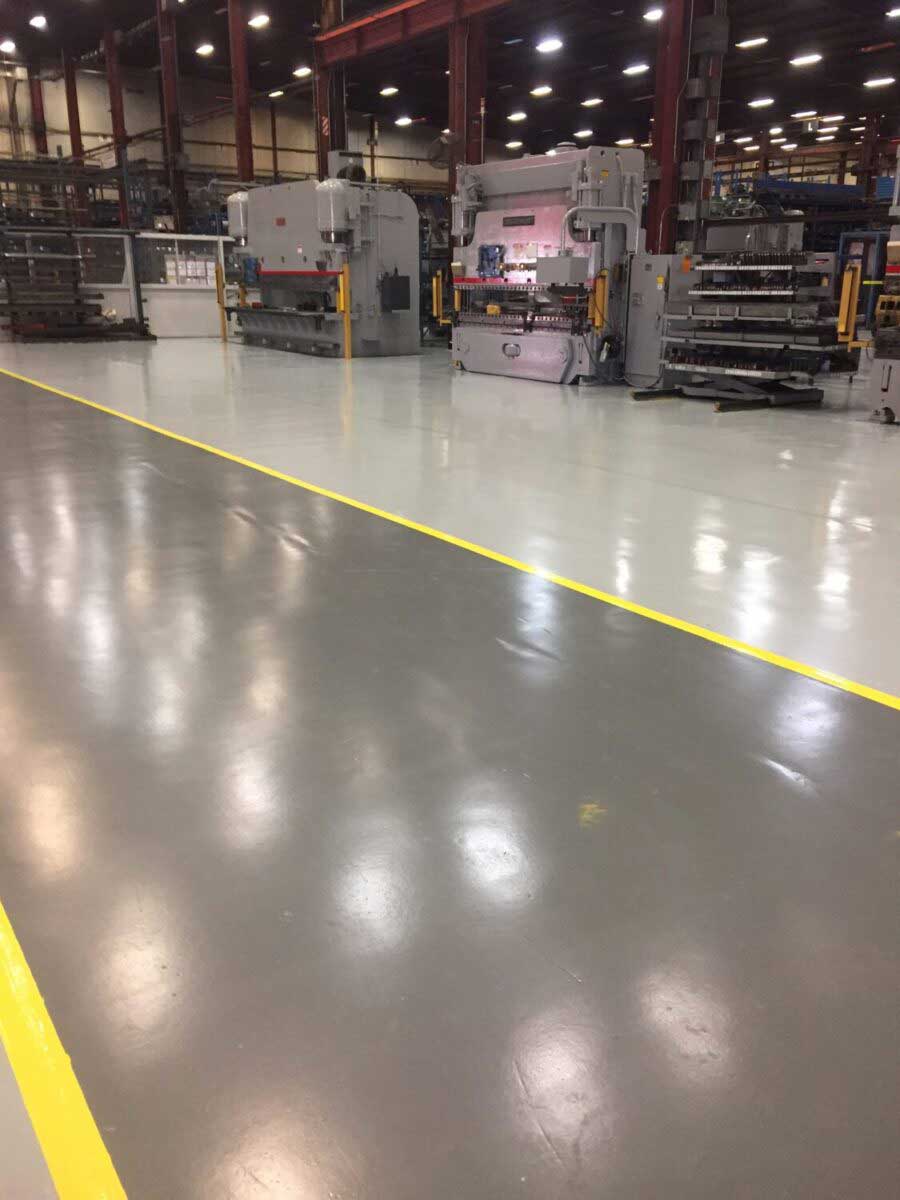
Warehouses, production areas, and service facilities where floors face equipment, abrasion, and contaminants day after day.
Explore Industrial Floor CoatingsNot every chemistry or system suits every environment. The right approach is the one matched to your floor and how it's used.
Selected around your space
Surface Shield chooses a system based on the things that actually shape how a floor holds up — the traffic it carries, moisture in and under the slab, how it will be cleaned, the appearance you're after, the condition of the existing concrete, and how the space is used.
Across South Jersey and Cape May County, that also means accounting for shore conditions — humidity, sand, and seasonal use — when we recommend the right buildup and topcoat for the job.
Surface Shield resinous flooring
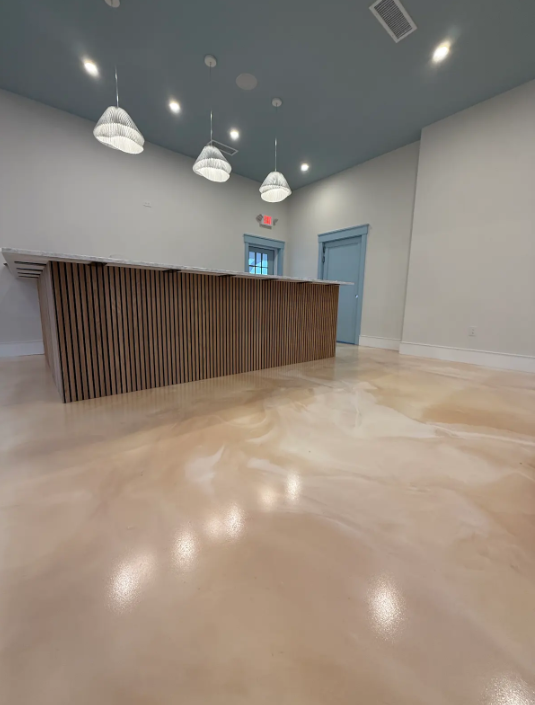
A cross-section of completed Surface Shield floors across residential, commercial, and industrial spaces. Systems are labeled by finish where known.
Polyaspartic & polyurea FAQ
Ready to build and invest in a better floor?Let's build your system.
Tell us about your space and what you need your floor to handle. We'll recommend the right system and provide a clear, no-pressure estimate.